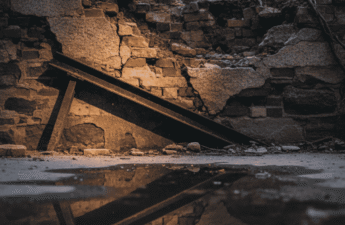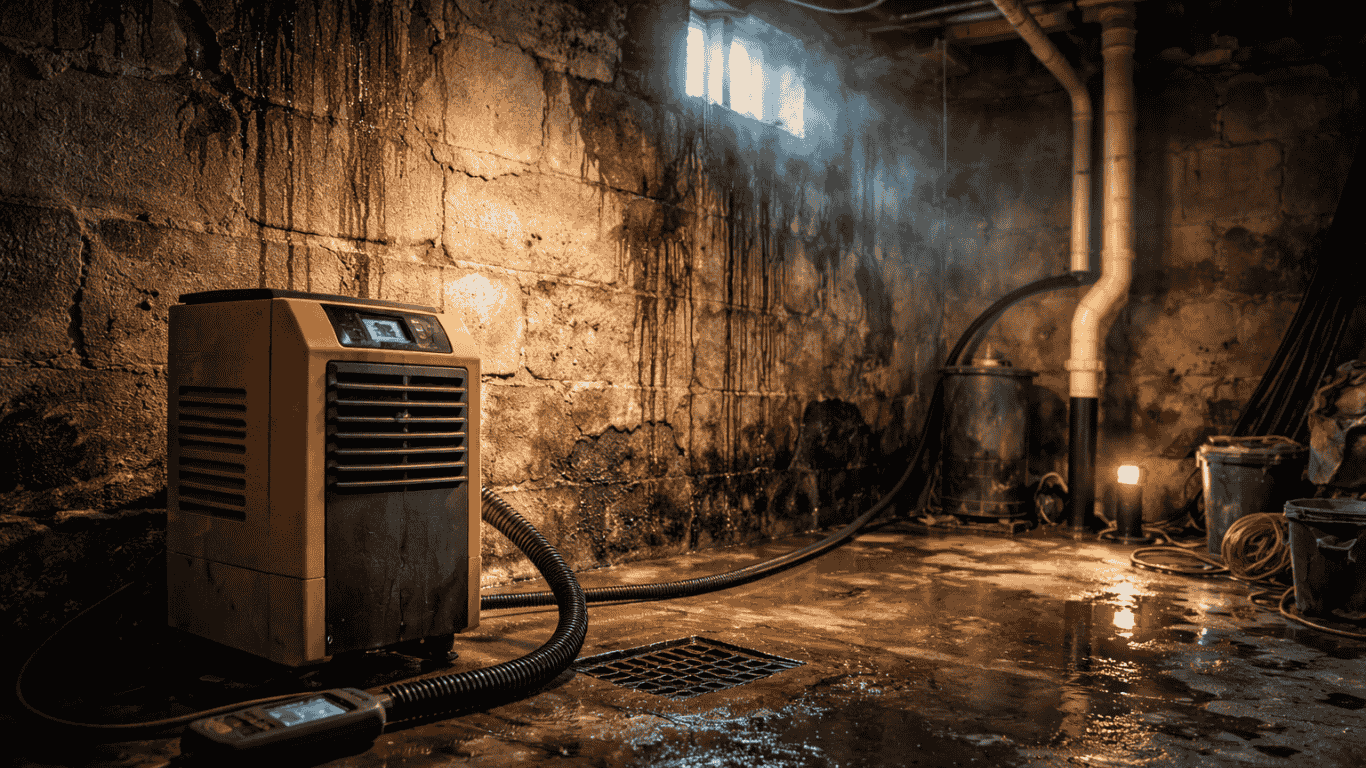
We all know that water is a patient intruder, and it does not always need a massive storm to enter your home. Instead, it relies on capillary action, in which water ascends through porous materials such as concrete against gravity. Think of your basement walls like a giant wick sitting in wet soil. Even when it is not raining, the ground around your home retains significant moisture.
High humidity levels in a basement often stem from the stack effect. This phenomenon occurs when warm air rises through the upper floors and escapes through the attic, creating a vacuum that pulls cold, damp air from the ground into the basement through tiny cracks.
The Invisible Pressure Cracking Your Foundation
One of the most powerful forces in nature is hydrostatic pressure. When the soil surrounding your foundation becomes saturated, the weight of that water exerts immense force against your basement walls.
According to credible research, saturated soil can exert thousands of pounds per square foot of pressure on a foundation wall, which eventually forces water through microscopic pores in the concrete, leading to telltale damp spots or floor cracks.
Moreover, a notable case study from a structural engineering firm in the Midwest found that homes with poor exterior grading were more likely to experience wall bowing due to this pressure. If your yard slopes toward your house, you are inviting a lake to live in your crawlspace.
How to Stop Basement Moisture Permanently
- Maintain Your Gutters: Ensure downspouts discharge at least six feet away from the foundation to prevent soil saturation.
- Install a Vapor Barrier: High-density plastic sheets can stop moisture from migrating through the floor and walls.
- Check Your Sump Pump: A mechanical failure during a storm is the leading cause of avoidable basement flooding.
- Monitor Humidity: Keep your basement below 50% humidity to prevent mold spores from colonizing your drywall.
| Moisture Source | Common Symptom | Best Scientific Solution |
| Hydrostatic Pressure | Seeping floor cracks | Interior drainage or sump pump |
| Condensation | Sweating pipes | Insulation and dehumidification |
| Capillary Action | Damp concrete walls | Silane-based penetrative sealants |
| Exterior Runoff | Corner puddles | Proper grading and gutter extensions |
What Is the Most Effective Way to Waterproof a Basement
The most effective strategy is to manage water before it reaches your concrete, a technique known as positive-side waterproofing. By applying a waterproof membrane to the exterior of the foundation, you create a physical shield. However, since excavating an existing home is expensive, many experts recommend an interior perimeter drain. This system intercepts water as it enters and directs it to a sump pump, effectively neutralizing hydrostatic pressure before it can cause damage.
Does a Dehumidifier Fix a Wet Basement
A dehumidifier is a helpful tool, but it is a bandage, not a cure. While it removes moisture from the air, it does nothing to stop the source of the water. Running a powerful dehumidifier in a leaky basement can pull more moisture through the walls by creating a vapor pressure imbalance. You must seal the entry points first, or you will simply be paying a high electricity bill to dry out the entire neighborhood’s groundwater.
Recent industry data suggest that nearly 60% of American homes experience basement moisture issues at some point. By treating the basement as a controlled environment rather than a neglected cave, you protect the structural integrity of your entire property.
Final Steps Toward a Dry and Healthy Home
Mastering the environment beneath your feet requires a shift in perspective from seeing a basement as a storage unit to viewing it as a breathing part of your home’s ecosystem. When you address the physics of water movement through proper drainage and vapor management, you do more than just save your drywall. You protect the air quality of every room above. A dry basement prevents the growth of allergens and preserves the resale value of your property, making it one of the most profitable home maintenance investments you can pursue. Stop fighting the symptoms and start managing the science, and you will finally be able to enjoy your lower level without checking the weather forecast every hour.