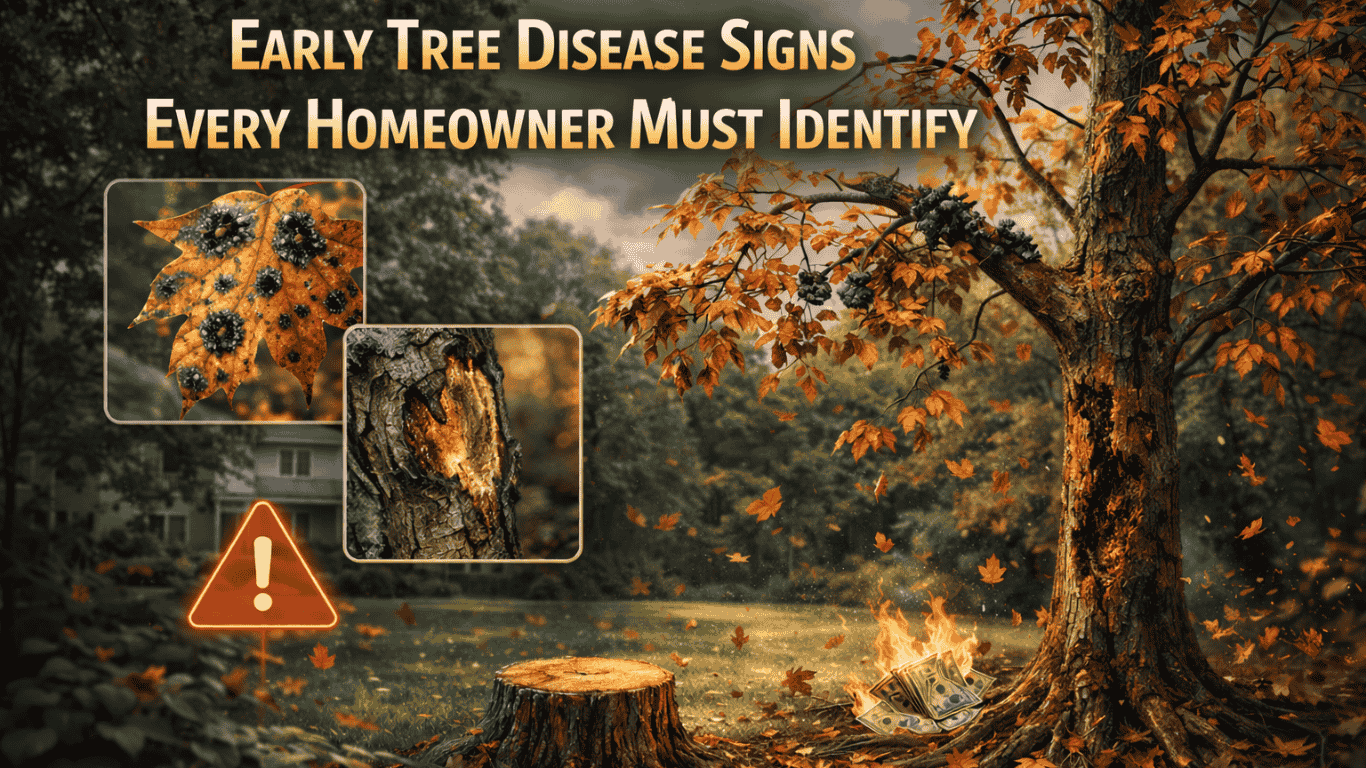
Just look at your favorite backyard oak and wonder if those strange black spots are a mere phase or a death sentence. Trees often act like stoic giants, suffering in silence until a problem becomes a structural nightmare. Spotting the difference between a minor seasonal quirk and a lethal fungal invasion can save you thousands of dollars in removal costs.
Beyond the money, healthy trees contribute up to 15 percent of your total property value, making them one of the few home assets that actually grow more valuable with age.
Is My Tree Sick or Just Stressed?
Many homeowners mistake environmental stress for disease. For instance, if your tree looks tired, it might just be thirsty, but certain signatures point directly to pathogens. You should look for conks, which are mushroom-like shelf growths on the trunk. These are the visible fruit of a fungus that is likely eating the heartwood of your tree from the inside out.
Research shows that early intervention in fungal outbreaks can increase a tree’s survival rate by nearly 30 percent compared with trees left untreated for a full season. When you notice “bleeding” sap or vertical cracks, the tree is essentially shouting for a doctor.
Identifying the Most Frequent Yard Invaders
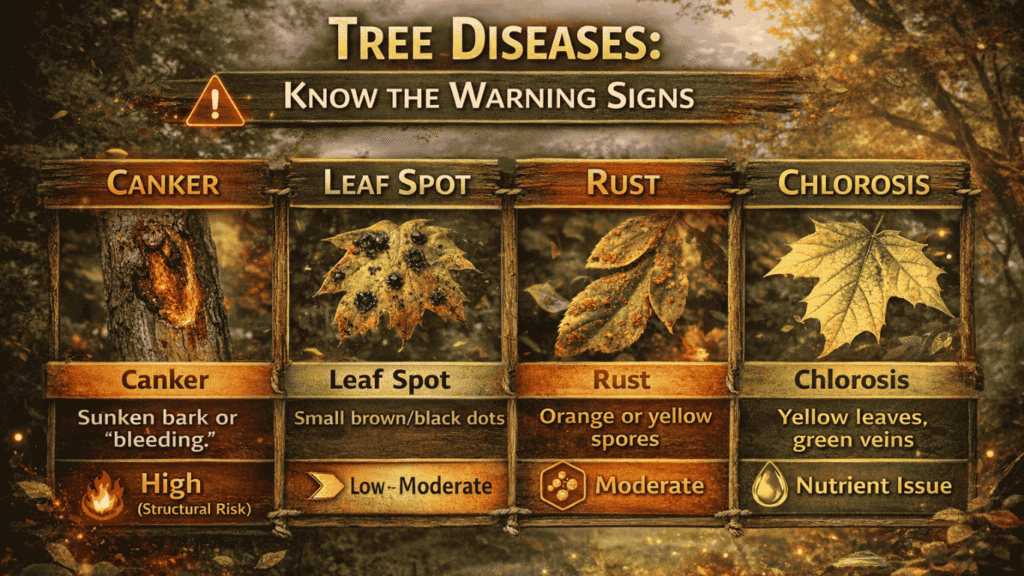
- Anthracnose: This fungal group loves cool, wet springs. You will see dark, water-soaked spots on leaves that eventually turn into large brown blotches.
- Oak Wilt: This is a heavy hitter. It moves through root systems, meaning if your neighbor’s oak has it, yours might be next. Look for leaves turning brown at the outer edges while the base stays green.
- Powdery Mildew: This looks like someone dusted your lilac or dogwood with flour. It is rarely fatal but acts as a gateway to more serious pests by weakening the plant’s immune system.
- Root Rot: If the soil smells like sulfur and the canopy is thinning, the roots might be drowning in a fungal soup.
How Do You Save a Dying Tree from Fungal Infection?
The first step is always sanitation, so if you prune a diseased branch and then move to a healthy one without cleaning your shears, you are essentially acting as a vector for bacteria. Experts recommend using a 10 percent bleach solution or isopropyl alcohol between cuts.
Interestingly, a case study in urban forestry showed that homes with diverse tree species were 40 percent less likely to lose their entire canopy to a single disease outbreak. This biological insurance prevents a single pathogen, such as the Emerald Ash Borer, from wiping out all shade on your lot.
Does Tree Disease Spread to Other Plants?
Many people ask if their roses are at risk if their maple is sick. The answer depends on the specific pathogen. While some fungi are host-specific, others are opportunistic. For example, Verticillium wilt can affect more than 300 plant species. If you notice a “V” shaped yellowing on leaves, it is time to act before it migrates to your garden.
Practical Tree Health Statistics
When Is It Time to Call a Professional?
If more than 25 percent of the canopy is dead, or the trunk has a deep, hollowing cavity, the risk of a fall becomes a liability. Modern arborists use ultrasonic sensors to inspect the trunk, detecting decay without damaging the bark.
Protecting your landscape begins with a keen eye and a proactive mindset toward these silent backyard threats. Identifying symptoms such as fungal cankers or unusual leaf spots early helps ensure your majestic oaks and maples remain a legacy rather than a liability. When you prioritize routine inspections and proper sanitation, you secure both the environmental beauty and the financial value of your property for years to come.